What drives the price of a safety induction, lessons-learnt film or 3D safety animation in the UK, where the money goes, and how to get more from a fixed budget.
There's no single price for a safety video, because a two-minute toolbox-talk clip and a multilingual site induction with 3D animated sequences are very different projects. What you can do is understand what drives the cost, so you can compare quotes properly and spend the budget where it changes behaviour.
The short answer
Published UK prices start at around £1,500 + VAT for a short, single-location induction package with a fixed scope. Industry reviews put a single professionally produced training video at roughly £3,000 to £15,000, depending on location, talent and post-production. Projects with several shoot days, detailed 3D animation or many language versions sit above that.
The rest of this guide explains where in that range your project is likely to land, and why.
What moves the price
| Cost driver | Keeps cost down | Pushes cost up |
|---|---|---|
| Format | Filmed walk-through or simple 2D animation | Detailed 3D animation, incident reconstruction, 360° / VR |
| Locations | One site, one shoot day | Several sites or assets, offshore or remote access |
| People on screen | Your own staff | Professional actors, stunt or SFX work for re-enactments |
| Length and modules | One focused film | Separate cuts for staff, contractors, visitors and drivers |
| Languages | Subtitles only | Full translated voiceovers in several languages |
| Technical detail | Generic equipment | Accurate models built from your drawings and P&IDs |
| Review rounds | One decision-maker, quick sign-off | Many stakeholders and repeated changes |
| Deliverables | MP4 for screens | Interactive versions with knowledge checks for an LMS |
| Timeline | Normal schedule | Rush delivery before a contract mobilises |
Typical costs by format
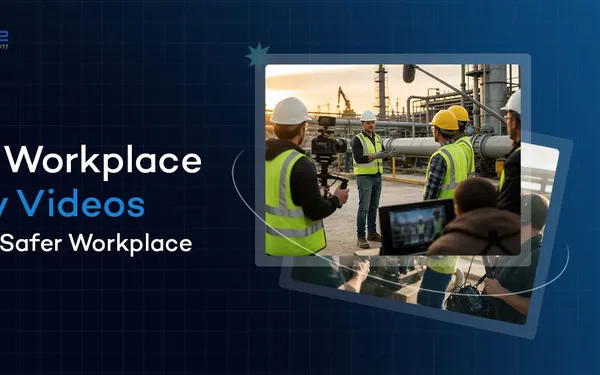
Site and safety induction videos. Usually the most predictable project: a site walk, a script built from your RAMS, one or two shoot days and an edit. Cost rises with the number of audiences (operatives, contractors, visitors), languages and animated sequences. More on induction videos.
Lessons-learnt and incident re-enactments. Cost depends mostly on whether the incident is re-enacted with actors, reconstructed in 3D, or both, and how sensitive the material is. More on lessons-learnt films.
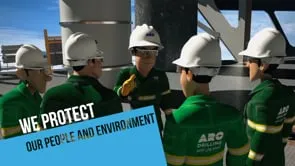
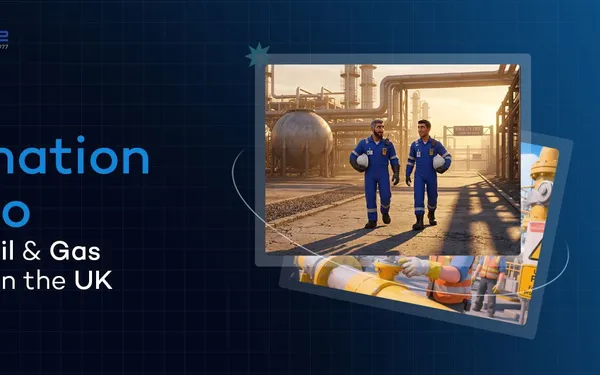
2D and 3D safety animation. Priced largely by length and complexity. Simple 2D explaining rules and behaviours costs less than detailed 3D modelled on your equipment. Animation costs more upfront than filming but is much cheaper to update later. More on safety animation.
Toolbox-talk and safety-moment clips. Short, single-topic clips are most cost-effective as a series, shot or animated together.
360° and VR safety experiences. Higher cost and longer lead time, but the strongest evidence of behaviour change: HS2 reported a 50% reduction in utility and service strikes after introducing VR 360 training. More on 360° safety.
Where to save, and where not to
- Save on length, not on the script. A tight five-minute film your workforce watches beats a twenty-minute one they don't. Script time is the cheapest place to make a video better.
- Use your own people on camera. Workers recognise their colleagues and their site, and you avoid actor fees.
- Shoot once, cut many. One well-planned shoot can produce the induction, separate contractor and visitor versions, and toolbox-talk clips.
- Plan languages early. Subtitles and voiceovers are cheaper when the script is written with translation in mind.
- Don't cut the technical review. An animation that looks real but shows the wrong step is worse than no video at all.
Bespoke, off-the-shelf or AI?
Not every topic needs a bespoke film. Generic subjects such as manual handling or fire awareness are often covered well by off-the-shelf course libraries, and AI avatar tools can turn a policy update into a presenter-led video quickly. Bespoke production earns its cost where the content is specific to your site, your equipment or your incident. We compare the three honestly in Bespoke vs off-the-shelf vs AI safety video.
How to get an accurate quote
Send us five things and we can give you a fixed price rather than a range:
- The site or sites, and whether filming is possible on them
- Who will watch it (operatives, contractors, visitors, drivers)
- The hazards or procedures it must cover
- The languages your workforce needs
- The date it needs to be live, and where it will be shown
Request a fixed quote or book a discovery call.
Frequently asked questions
Is animation cheaper than filming?
Not always upfront. Simple 2D animation can be cheaper than a multi-day shoot, but detailed 3D usually costs more. Animation is almost always cheaper to update when procedures change, because there's nothing to reshoot.
Do translated versions cost much extra?
Subtitles add relatively little. Full voiceovers in several languages add more, but far less than producing separate films. Planning languages at the script stage keeps the cost down.
How long does a safety video take to produce?
It depends mostly on review and approval times. Build in time for your HSE team to review the script and the cut, especially before a contract mobilises.
Planning a safety video?
Tell us about your site and workforce. We'll recommend the right format and send a fixed quote.